

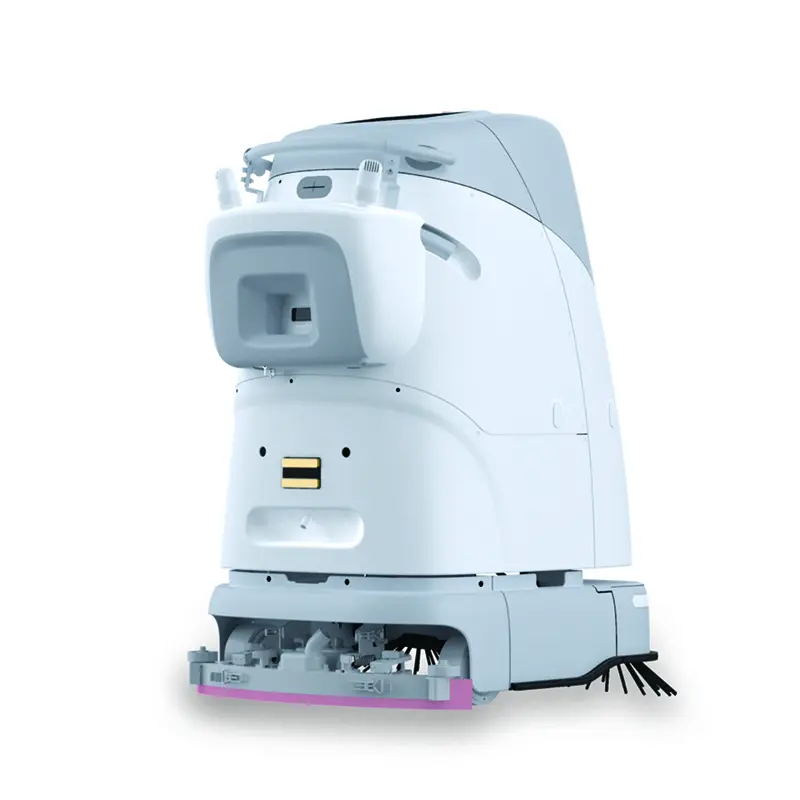
If you manage cleaning for a commercial space, school, healthcare facility, or large home, you may have considered upgrading from mopping to an electric floor scrubber. While the upfront cost is higher than a mop and bucket, the real value lies in long-term efficiency, consistency, and results. In many cases, yes—it’s a worthwhile investment. This shift from manual to automated cleaning turns a slow, variable task into a fast, reliable, and thorough process. Let’s explore why these machines often justify their cost and who benefits most.
The Core Advantages: What an Electric Floor Scrubber Delivers
1.Unmatched Time and Labor Savings: The most compelling advantage is efficiency. A walk-behind scrubber cleans thousands of square feet per hour far faster than a mopping crew. This frees staff for other tasks, drastically cuts labor costs, often allowing the machine to pay for itself within a year or two.
2.Superior Cleaning Results: Unlike mopping, which often just pushes dirty water around, a scrubber performs a three-step process in one pass:
- Sprays a cleaning solution.
- Scrubs the floor with rotating brushes or pads under pressure.
- Vacuums the dirty water into a recovery tank, leaving the floor clean, rinsed, and dry to the touch almost immediately. This eliminates slip hazards and streaky residue.
3.Consistency and Professional Standards: Manual mopping quality depends heavily on the individual’s effort and technique. A scrubber delivers the same high standard every time, ensuring a uniformly clean appearance that reflects well on your business or facility.
4.Reduced Chemical and Water Usage: Modern scrubbers use precise dispensing systems, applying the optimal amount of solution. Combined with efficient water recovery, they can cut chemical and water consumption by up to 70% compared to traditional mopping, leading to cost savings and environmental benefits.
5.Improved Worker Health and Safety: Eliminating strenuous mopping, wringing, and carrying heavy buckets reduces physical strain, fatigue, and the risk of slip-and-fall accidents for cleaning staff. It’s an investment in employee well-being.
They deliver the highest return on investment in these environments:
1.Large Commercial Spaces: Retail stores, supermarkets, warehouses, and shopping malls with vast areas of tile, vinyl, or polished concrete.
2.Educational and Institutional Facilities: Schools, universities, and government buildings with long corridors and common areas that see heavy foot traffic.
3.Healthcare and Hospitality: Hospitals, clinics, hotels, and restaurants where hygiene, appearance, and fast drying times are critical.
4.Industrial and Manufacturing Settings: Factories and workshops where floors collect grease, oil, or gritty dirt that a mop can’t handle effectively.
5.Anywhere “Clean Floors” Are a Business Priority: If the appearance and safety of your floors directly impact customer perception or operational efficiency, the professional result of a scrubber is invaluable.
Important Considerations Before You Buy
While the benefits are clear, an electric floor scrubber isn’t a one-size-fits-all solution. Ask yourself these questions:
1.What is the Size and Layout of Your Space? Measure your cleanable square footage. For very small areas (under 5,000 sq ft), a high-quality auto-scrubber might be overkill. For large, open areas, it’s essential.
2.What Type of Floors Do You Have? Ensure the machine is compatible with your flooring ( hard floors, sealed concrete, epoxy). Most scrubbers work on common commercial surfaces.
3.Walk-behind vs. Ride-on: Walk-behind floor scrubbers are suitable for most locations. Ride-on floor scrubbers are suitable for large, accessible spaces, distribution centers, or airport terminals.
4.Battery Runtime and Maintenance: Consider how long the battery lasts versus your cleaning schedule. Factor in simple maintenance like brush/pad changes and tank emptying.
Calculating the Return on Investment (ROI):
1.Current Cost: Total the monthly hours spent mopping x labor cost per hour + cost of chemicals, mops, and buckets.
2.New Cost: Calculate the monthly cost of the scrubber (purchase price divided by its expected lifespan in months) + reduced labor hours + scrubber-specific chemicals.
3.Compare: In most commercial settings, the labor savings alone create a rapid payback period, often between 12-24 months. The ongoing benefits of better cleanliness and safety are added bonuses.
Final Recommendation
Are electric floor scrubbers worth it? For any business or facility manager responsible for cleaning medium to large areas, the answer is typically a resounding yes. The investment transforms a major operational expense labor into a controlled, efficient, and higher-quality outcome.
Before purchasing, rent or demo a machine for a week to see the impact firsthand in your environment. Consult with a reputable equipment dealer who can recommend the right size and model based on your specific floors and usage patterns. An electric floor scrubber isn’t just a cleaning tool; it’s a strategic asset that boosts productivity, elevates standards, and contributes to a safer, more professional environment.
Post time: Dec-29-2025