

For facility managers, choosing between a driverless (autonomous) floor scrubber and a ride-on scrubber is key to efficient, reliable cleaning. As technology evolves, driverless scrubbers offer hands-free operation and challenge traditional machines. This article compares the two types in terms of efficiency, cost, applications, and safety to help guide your choice.
How Driverless and Ride-On Floor Scrubbers Work
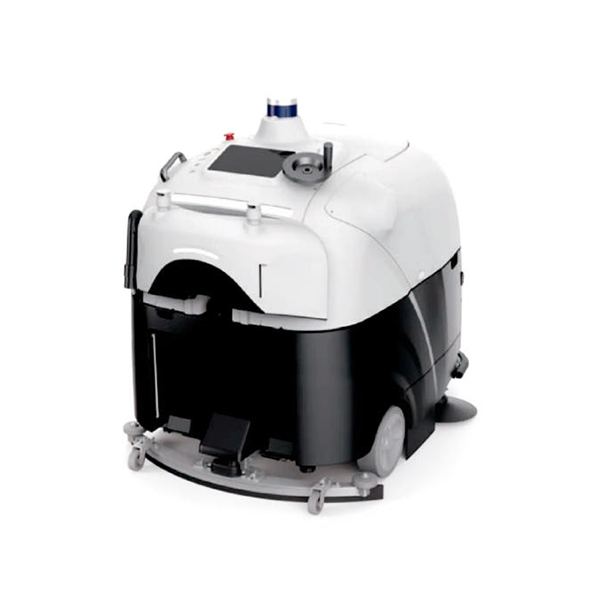
The robotic floor scrubber employs sensors, cameras, AI applications and mapping technology to automatically clean floors based on predetermined routes. Upon being set up, this machine can work independently; it will just maneuver around people or obstructions that it encounters and will adapt to the environment on the go. Facility managers will control the machine via apps or dashboard and will able to amend strategies or get notified in case of abnormalities.
On the other hand, a ride-on scrubber would require a skilled worker to run the machine. The worker would clean and control the speed and direction of the scrubbing, making quick adjustments accordingly to the circumstances. Ride-on scrubbers are appreciated for their flexibility.
Efficiency and Labor Costs
The driverless floor scrubber is an effective device; it uses programmed paths for reliable operation, resulting in plenty of time savings. The main advantage of using it is the fact that you do not need to employ a person to operate it, thus saving you on labor costs, as there is no need to train any staff.
Ride-on scrubbers can help to clean areas quickly, yet its effectiveness is determined by the operator’s skill, focus and consistency. However, costs arise when large areas need to be cleaned frequently or when staff levels have to be maintained. While ride-on scrubbers can cost less initially, its ongoing labor costs could negate the initial savings.
Best Use Cases for Each Type
Automated scrubbers fit perfectly into typically vast, open cleaning environments like warehouses, airports, malls, and hospitals since they are particularly efficient where floor layouts are constant and predictable cleaning can take place.
Ride-on scrubbers are designed for small, busy locations and places where cleaning plans are constantly changing or need quick attention. Where there is a constant presence of workers, ride-on floor scrubbers provide quick access and control.
Key Differences in Safety and Reliability
Accidents can be avoided with the help of driverless scrubbers which have advanced capabilities in identifying any obstacles in their way allowing them to stop on time. A vehicle with advanced sensors protects from accidents and prevents any dangerous situations from occurring by sending alerts to operators. Human error is also prevented because there is no operator.
The use of Ride-on scrubbers requires operators being vigilant and experienced. Although accidents when operating the scrubbers are rare, fatigue or distractions might cause mistakes. Actual reliability depends on the operator and the proper maintenance.
Environmental Impact and Sustainability
The autonomous floor scrubber effectively optimizes water and detergent consumption which leads to reduced wastage and impact on the environment. The automated schedules in these machines also make the methods of cleaning more sustainable. Most of these machines are electric and, thus, fulfil the facilities’ green initiatives.
As for the question, whether ride-on scrubbers consume more water and chemicals, can be answered in the affirmative but only to some extent, as the degree of sustainability for these machines is tied to operator’s training and discipline.
FAQ: Cleaning Technology in Practice
Do driverless scrubbers require special training?
Not really. They’re configured and monitored via apps or dashboards, so staff mainly set routes and respond to alerts rather than learn manual driving.
Can a ride-on scrubber be cheaper long-term?
Possibly. They often cost less upfront, but frequent cleaning of large areas may offset savings through labor costs. Match the machine to your workload.
What happens if an obstacle blocks a driverless scrubber?
Sensors detect it and stop the machine in time, while alerts notify operators—reducing accident risk without an on-board driver.
Are driverless scrubbers more sustainable?
Generally yes—they optimize water and detergent use, run on automated schedules, and are often electric. Ride-on sustainability depends more on operator discipline.
Many features of the automatic floor scrubber make it efficient, economical, safe, and environmentally friendly. Given the need for flexibility, quick response, or changes in layout, ride-on floor scrubbers may still be a good choice. Once facility managers are aware of the principal distinctions, they can make sound decisions on cleanliness and saving money.
Post time: Oct-30-2026