

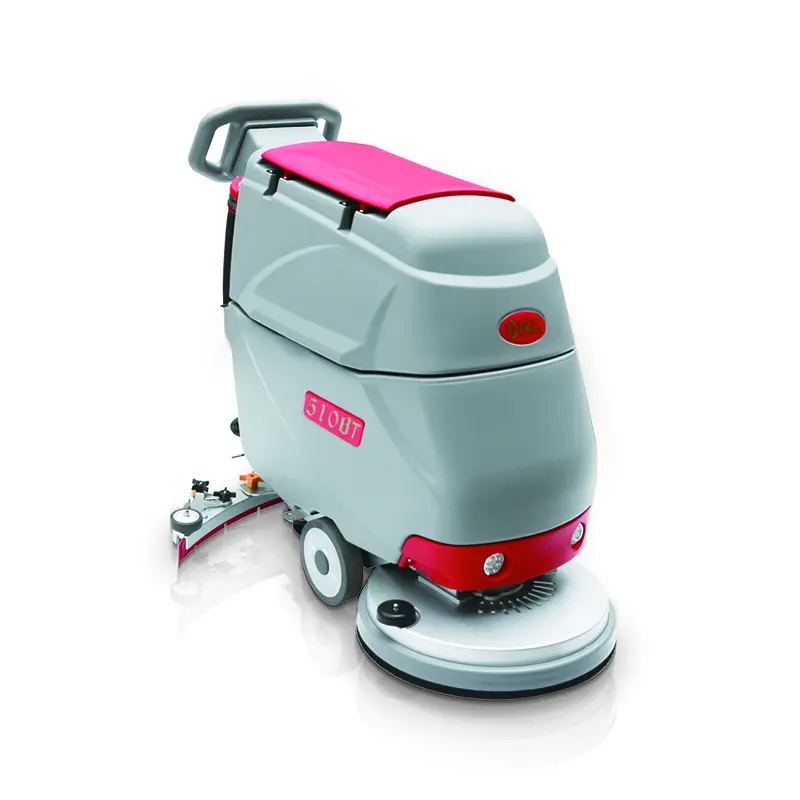
If you’re managing a commercial space, you’ve likely dealt with the limitations of a mop and bucket. An electric hand push floor scrubber is a machine designed to solve that problem. It scrubs the floor, washes it with clean solution, and then vacuums up the dirty water all in one pass. What you’re left with is a floor that is not only clean but also dry enough to walk on almost immediately.
Why a Mop Isn’t Cutting It
A mop simply pushes water and dirt around. It leaves behind residue, struggles with textured surfaces like tile grout, and keeps floors wet for too long a real safety hazard. If your goal is efficiency and safety, a walk-behind scrubber is a fundamentally different approach. It doesn’t just clean; it extracts the soil, removing slip hazards and improving hygiene in a fraction of the time.
Who Needs This Machine
This type of equipment isn’t for everyone, but if your space fits any of these categories, it’s worth a close look.
●Retail stores: Polished floors need to stay spotless without closing aisles for long periods. A scrubber dries quickly, so customers can walk safely right behind you.
●Restaurants and commercial kitchens: Grease and food debris require daily deep cleaning. A scrubber removes the film that mops leave behind.
●Warehouses: Concrete floors accumulate tire marks, dust, and spills. An electric hand push floor scrubber handles these heavy soils better than any manual method.
●Healthcare and clinics: High sanitation standards demand consistent, residue-free floors. A scrubber ensures every inch gets the same level of clean.
For indoor hard surfaces like tile, concrete, epoxy, or sealed wood, this machine is the standard for professional results.
The Real Benefits (Not Just Marketing)
If you’re reading this, you probably care less about flashy features and more about whether this machine will actually make your life easier. Here’s what matters.
Labor efficiency is the biggest driver for most buyers. One person with a scrubber can clean the same area in about a third of the time it would take a team with mops. That means your staff can focus on other tasks, or you can clean more often without adding labor hours.
Faster drying is a direct safety benefit. Since the machine vacuums up the water as it goes, floors are left nearly dry. You don’t have to cordon off areas or worry about slip-and-fall accidents during business hours.
Consistency is something mops can’t guarantee. A scrubber delivers the same results every time, regardless of who is behind it. The machine controls the pressure, water flow, and solution mix, so there’s no guesswork.
What to Consider Before Buying
Choosing the right model comes down to a few practical decisions. Getting these right makes the difference between a machine that works for you and one that creates extra work.
Battery type matters if you go cordless. Lithium-ion batteries are lighter, charge faster, and require no maintenance. Lead-acid batteries cost less upfront but need regular watering and have a shorter daily run time. Consider how many hours you need to clean each shift.
Brush or pad depends on your floor. Cylindrical brushes dig into grout lines and textured concrete, making them ideal for tile or rough surfaces. Disc pads are better for smooth, flat floors like epoxy or polished concrete. Some models let you switch between both, which is useful if you have mixed floor types.
Tank size affects your workflow. Larger tanks mean fewer stops to refill and empty, but they also add weight. A good rule is to choose a tank capacity that covers your typical cleaning zone in one go. Stopping mid-job breaks momentum.
Daily Use and Maintenance
One concern buyers often have is whether these machines are complicated to keep running. In practice, they’re straightforward.
Daily maintenance takes a few minutes: rinse the recovery tank, wipe down the squeegee blades, and check for debris caught in the brushes. Squeegee blades wear out every few months depending on usage, but replacing them is simple. For battery-powered units, proper charging habits extend battery life significantly.
An electric hand push floor scrubber is built to handle daily use without constant repairs, provided basic care is followed.
Common Questions Buyers Ask
How long does it take to learn to use one?
Most people get comfortable within a single cleaning session. Controls are simple often just a couple of switches and the machine does the heavy work for you.
Can it handle grease or oil?
Yes, especially if you choose a model that allows for different pad types or brushes. For heavy grease, some users add a degreasing solution to the clean water tank.
Is it safe for sensitive floors?
Yes. You can adjust the down pressure on most models, and the machine uses soft bristles or pads that won’t scratch sealed surfaces when used correctly.
Is It Worth the Investment
If you’re currently using mops or hiring outside crews, the return on investment is often clear. Labor costs drop, cleaning quality improves, and safety risks from wet floors decrease. For spaces with daily spills or heavy foot traffic, it’s not just an upgrade it becomes a practical necessity.
An electric hand push floor scrubber pays for itself in time saved and safety improved. The key is matching the machine to your space, floor type, and cleaning frequency.
Summarize
An electric hand push floor scrubber replaces a labor-intensive, inconsistent process with a simple, repeatable system. It saves hours of staff time, improves safety, and leaves your floors looking professionally cleaned every time. Whether you manage a small retail shop, a busy kitchen, or a medium-sized warehouse, this machine gives you control over cleanliness without adding complexity to your day.
Post time: Apr-03-2026