

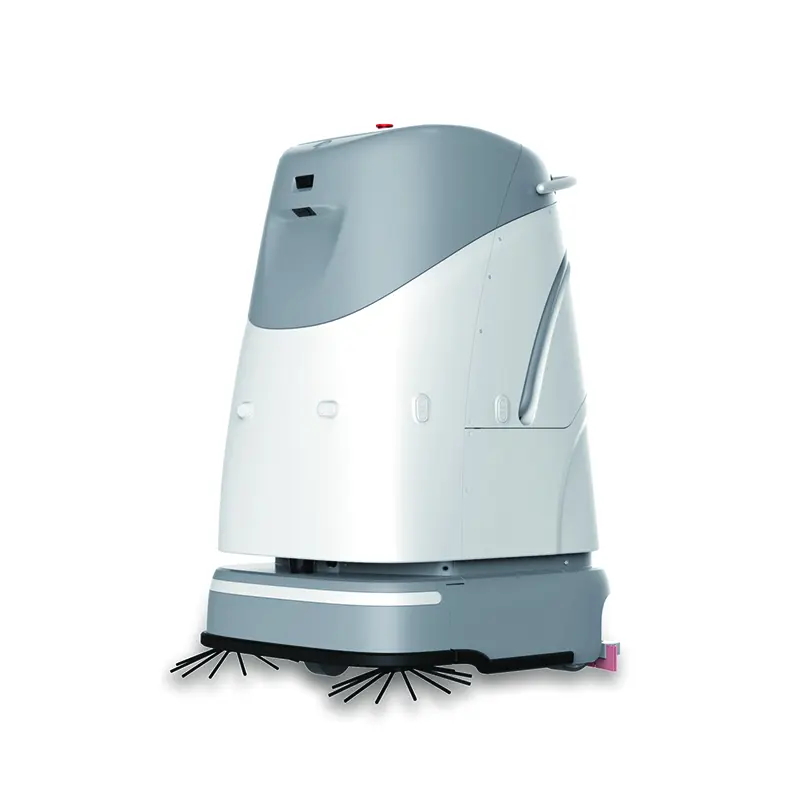
A floor scrubber is a cleaning machine that scrubs, washes, and dries hard floors in a single pass. Instead of relying on a mop and bucket where dirty water gets pushed around and floors stay wet this machine lays down fresh cleaning solution, agitates the surface with rotating brushes, and immediately vacuums up the soiled liquid. The result is a clean floor that dries within minutes, not half an hour. Whether walk-behind or ride-on, the basic working principle remains the same.
The Core Mechanism: Three Steps in One Pass
Every floor scrubber operates on the same fundamental cycle. Understanding this helps buyers see why the machine outperforms manual methods so decisively.
1.Solution dispensing: A clean water tank holds fresh water mixed with a measured amount of cleaning chemical. As the operator moves forward, the machine releases this solution onto the floor through nozzles positioned just ahead of the scrub deck. The flow rate can often be adjusted to match the floor condition lighter flow for routine maintenance, heavier flow for built-up grime.
2.Scrubbing: The scrub deck houses one or more rotating brushes or pads. These spin against the floor surface, mechanically dislodging dirt, grease, and scuff marks. Brush pressure is consistent and adjustable on many models, meaning the machine doesn’t tire the way a person pushing a mop does. Disc-style decks use round pads that excel on smooth, even surfaces, while cylindrical brush decks sweep fine debris into an onboard hopper as they scrub, essentially doing two jobs at once.
3.Recovery: Right behind the brush deck, a squeegee assembly wipes across the floor. A vacuum motor pulls the dirty water through the squeegee and up into a separate recovery tank. This is the step that changes everything clean solution goes down, dirty solution comes right back up. The floor left behind is damp, not soaking wet.
Why the Squeegee Matters More Than You Think
The squeegee is arguably the most critical component of any floor scrubber. If it’s worn, cracked, or misadjusted, the machine leaves streaks and puddles. Proper squeegee angle and height ensure the vacuum pulls every drop of soiled water off the floor. A well-designed machine makes squeegee inspection and replacement straightforward, with tool-free removal on many modern units. Buyers who prioritize easy maintenance here save themselves daily frustration.
Walk-Behind vs. Ride-On: Same Principle, Different Scale
A walk-behind floor scrubber suits smaller to mid-sized spaces. The operator pushes or guides it, much like a lawn mower. Cleaning widths typically range from 17 to 28 inches. These models fit through standard doorways and work well in retail shops, restaurants, school hallways, and clinic corridors.
A ride-on floor scrubber covers serious square footage. With widths from 32 inches up to 50 inches or more, and larger solution and recovery tanks, these machines clean warehouses, distribution centers, airport concourses, and large manufacturing floors without constant refilling stops. The operator sits or stands on the machine, covering tens of thousands of square feet per hour.
Some compact stand-on models bridge the gap, offering ride-on speed in a footprint nearly as small as a walk-behind. These work especially well in grocery stores and retail spaces where maneuverability around displays and end caps matters.
Practical Benefits That Affect Daily Operations
For anyone managing a cleaning team, the advantages of a floor scrubber go beyond just a cleaner floor:
- Faster drying times: Because dirty water gets vacuumed immediately, floors typically dry in under five minutes. This minimizes slip hazards and customer-facing disruption.
- Labor efficiency: One operator on a ride-on floor scrubber can replace a crew of manual moppers. The machine doesn’t slow down as a shift progresses.
- Chemical control: Precision dispensing uses less chemical than mixing a mop bucket by hand, cutting costs and reducing environmental impact.
- Hygiene: Separate clean and recovery tanks eliminate the problem of reusing dirty mop water. For healthcare and food preparation environments, this separation matters.
Choosing the Right Floor Scrubber for Your Situation
Start with the space. Measure total square footage and check for narrow aisles, ramps, or tight corners that might limit machine size. Next, consider the floor surface. Polished concrete, vinyl composition tile, ceramic tile, and epoxy coatings all respond differently to brush types and pressure. Smooth surfaces generally tolerate disc brushes well, while textured or uneven floors may benefit from cylindrical brushes with stiffer bristles.
Think about your cleaning window. A machine that runs for three hours on a battery charge might be fine for a single shift, but a facility running continuous operations may need lithium-ion batteries with fast opportunity charging. Tank capacity follows the same logic larger tanks mean fewer refill stops.
Onboard features like automatic solution mixing, digital diagnostics, and adjustable brush pressure can simplify training and keep results consistent across different operators.
Where a Floor Scrubber Fits In
Grocery stores, hardware retailers, and shopping malls use these machines during open hours without disrupting customers. Warehouses with polished concrete depend on them for dust control and consistent appearance. Hospitals and long-term care facilities value the near-dry results and the hygienic separation of clean and soiled water. Even schools are switching over, particularly in cafeterias and gymnasiums where large, hard-surface areas need frequent attention.
A floor scrubber isn’t just a faster mop. It’s a different approach to floor care one that integrates cleaning and drying into a single efficient step. Once you understand the simple three-part process behind it, the decision to move away from manual mopping becomes a lot clearer.
Post time: Apr-30-2026