

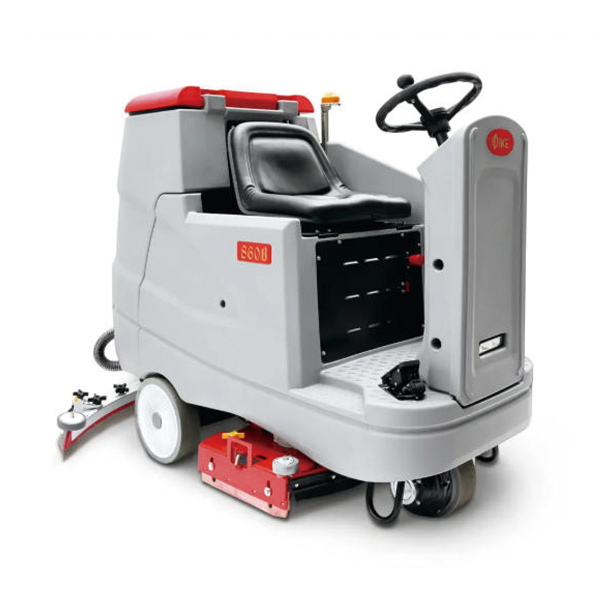
A ride on scrubber, also referred to as a ride on scrubber machine or ride on scrubber dryer, is a battery‑powered sit‑on cleaning unit built for large hard‑floor spaces. Some hybrid designs function as a ride on scrubber sweeper, integrating sweeping and scrubbing capability. While these machines share the core purpose of washing and recovering wastewater in one pass, there are critical distinctions in drive performance, intelligent functions, tank sizing and operating limits that affect real‑world facility outcomes. This article delivers neutral technical guidance for facility managers evaluating ride‑on cleaning equipment.
How a Ride‑On Scrubber Dryer Operates
A standard ride on scrubber dryer completes three core actions within a single forward movement. Solution water flows onto the floor, dual disc brushes apply adjustable down‑pressure to lift grime, oil residues and tire marks. Immediately behind the brush assembly, a flexible squeegee presses against the ground; a high‑power vacuum motor pulls dirty wastewater into the recovery tank, leaving floors nearly dry and slip‑safe.
Modern electric ride on scrubber machine units incorporate automated controls. One‑touch lifting for brushes and squeegees avoids component damage during reversing maneuvers. Soft‑start motor logic reduces electrical surge and extends component lifespan. An LCD control panel delivers simplified operation, fault diagnosis and status alerts for clean‑water shortage and full sewage‑tank conditions, lowering daily maintenance complexity.
Ride‑On Scrubber‑Dryer vs Ride‑On Scrubber‑Sweeper
It is important to clarify functional boundaries before purchasing. A pure ride on scrubber dryer focuses on wet scrubbing and water recovery, ideal for floors covered in oil, sticky spills and ground‑in dirt. Food processing workshops with epoxy flooring are a typical use case for this type.
A ride on scrubber sweeper adds dry sweeping functionality. It collects loose debris like sand, metal chips and packaging scraps before wet scrubbing. Hybrid units suit distribution warehouses where both dry waste and oily residues appear, but they bring extra mechanical complexity and higher routine service requirements. Most manufacturing and commercial facilities use dedicated ride‑on scrubber‑dryers for primary floor‑care tasks.
Critical Performance Parameters for Selection
Beyond basic cleaning width, several specs define day‑to‑day usability for a ride on scrubber machine:
- Cleaning efficiency & working hours: Theoretical hourly coverage depends on scrubbing width and travel speed. Real continuous runtime from a full battery set determines how many zones can be finished per shift, without repeated charging interruptions.
- Solution and recovery‑tank capacity: Larger tanks cut down frequent refilling and draining cycles. Mismatched tank sizes will increase non‑productive downtime in large‑size sites.
- Drive and climbing capability: High‑torque front‑drive systems deliver flexible turning performance and negotiate gentle ramps. Facilities with loading‑bay slopes must verify published climbing ratings under real‑world loaded weight.
- Noise output: Low‑noise models around 65 dB can operate while sites remain occupied, suitable for malls, hospitals and transit hubs. Higher noise levels restrict cleaning to off‑shift hours only.
- Safety protection: Over‑current and motor overload protection prevents electrical damage during brush jams. Built‑in fault‑alarm functions speed troubleshooting for on‑site technicians.
Typical Application and Practical Constraints
From years of field commissioning for floor cleaning equipment, we find that many facility managers overlook aisle width and ramp gradient before purchase. Ride on scrubber dryer equipment is widely deployed inside manufacturing workshops, logistics warehouses, shopping centers, parking garages and large public venues. It works on epoxy, concrete, tile and terrazzo hard surfaces.
Several site‑driven constraints are often overlooked in datasheet reviews:
- Machine overall dimensions must fit aisles, door‑ways and elevator access before purchase. Even high‑efficiency equipment cannot deliver value if it cannot enter target cleaning zones.
- Battery charging infrastructure should be planned. Typical charging cycles take 8‑10 hours; shift‑based heavy‑use scenarios may need spare battery packs.
- Wear‑parts including squeegee rubber, disc brushes and vacuum filters need periodic inspection and replacement to retain cleaning and water‑pick‑up performance.
Conclusion
Whether specifying a ride on scrubber dryer or hybrid ride on scrubber sweeper, facility teams should avoid selecting purely on advertised cleaning‑area figures. Evaluate battery runtime, tank capacity, climbing performance, noise rating and site access limits together with floor‑soil characteristics. Matching machine capability to actual site conditions delivers stable cleaning results and lowers long‑term operating costs.
Need guidance for ride‑on scrubber selection?
If you are assessing ride on scrubber machine, ride on scrubber dryer or ride on scrubber sweeper for your facility, share your floor area, surface type, ramp conditions and noise requirements. Our technical team can offer parameter‑matching suggestions for your cleaning project.
Frequently Asked Questions
What is the main difference between a scrubber‑dryer and a scrubber‑sweeper?
A ride‑on scrubber‑dryer performs wet washing and water recovery. A scrubber‑sweeper adds dry debris collection for mixed‑waste environments, with extra mechanical maintenance demands.
Is low noise important for a ride‑on scrubber machine?
Yes. Units around 65 dB allow daytime cleaning in occupied public‑access sites. Higher noise limits cleaning work to night‑time or off‑shift windows.
What common wear parts need regular replacement on ride‑on scrubbers?
Squeegee blades, disc brushes and vacuum‑system filters are consumables. Worn components will reduce water recovery and overall cleaning quality.
Can any ride‑on scrubber handle sloped loading‑bay floors?
Not all. Confirm published climbing‑ability ratings; performance drops when tanks hold full water weight. Exceeding gradient limits risks traction or stability hazards.
Post time: Nov-02-2026