

An industrial high pressure washer pumps water from 1,500 PSI to over 5,000 PSI, stripping dirt, grease, mill scale, and coatings that a bucket and brush can’t touch. It combines a motor or engine, a high-pressure pump, and a spray wand into one machine built for continuous duty. For maintenance crews, fleet managers, or food plant sanitation teams, it replaces manual scrubbing with a water jet that cuts labor and uses less water than a running hose.
Where industrial pressure washers earn their keep
Industrial high pressure washers appear wherever heavy soiling meets hard surfaces. Construction yards clean mud and concrete residue from excavators, dozers, and loader buckets before rental returns. Food plants sanitize floors, walls, conveyors, and mixing vessels daily, often with hot water and food-grade detergents. Manufacturers clean grease-caked stamping presses, injection molds, and paint fixtures. Oil and gas sites wash drill pipe, wellheads, and service rigs coated in drilling mud and crude. Municipal fleets clean buses, garbage trucks, and road vehicles in dedicated wash bays. Farms blast soil, fertilizer residue, and manure from tractors, implements, and livestock housing. Shipyards strip hull fouling, salt crust, and rust from vessels and container handlers.
The common requirement in every case is cleaning power that works fast enough to keep the operation moving, built into a machine that tolerates the duty cycle and the environment.
Key specifications that matter when comparing machines
A buyer comparing one industrial high pressure washer to another quickly learns that a few numbers determine whether the machine fits the job or struggles through it.
●Pressure and flow rate:Pressure (PSI/bar) cuts and lifts; flow (GPM/LPH) rinses and carries debris away. High pressure with low flow cuts stubborn deposits but rinses slowly. Moderate pressure with high flow flushes large areas fast. Match the balance to the soil: degreasing needs higher pressure; washing mud off fleets needs higher flow.
●Pump type and material:Axial cam pumps suit light to medium industrial use. Triplex plunger pumps handle continuous duty and higher pressures. Brass heads work for general applications; stainless steel or ceramic-coated heads resist abrasive wear and chemical corrosion.
●Power source:Electric motors run quietly with zero exhaust, ideal for indoor food plants, pharma facilities, and enclosed wash bays. Gas or diesel engines work where electricity is unavailable remote sites, roadside locations, outdoor yards. Engine horsepower limits sustainable pressure and flow.
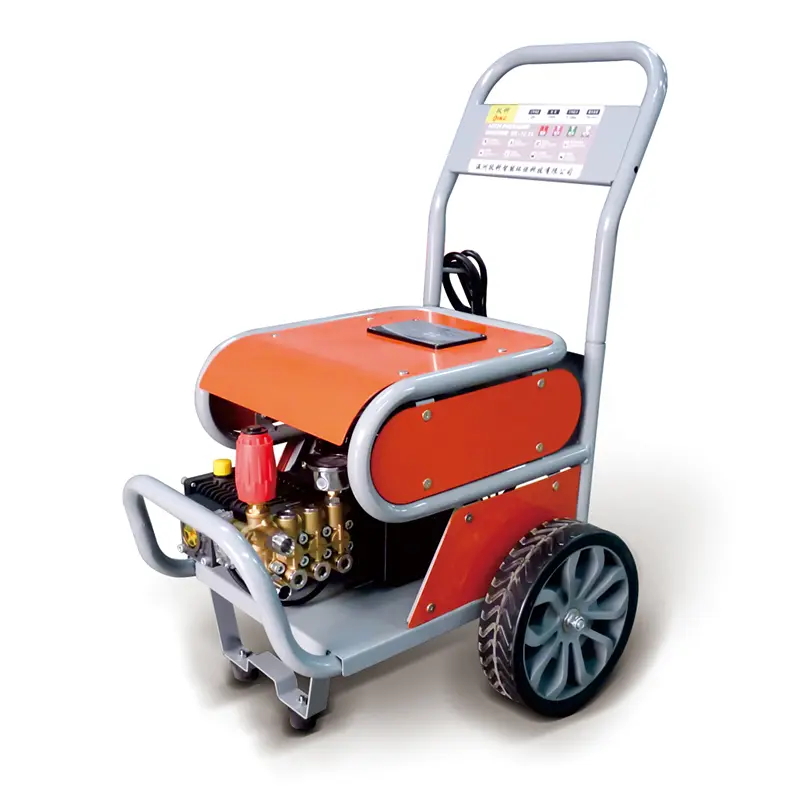
●Frame and portability:Stationary units mount on walls or skids in fixed bays. Portable units ride on carts, trailers, or truck beds. Heavy-gauge steel frames with fork pockets or lifting eyes ease forklift handling. Pneumatic tires help over uneven ground.
●Hose, wand, and nozzle options:Hose length sets how far the operator can move without repositioning. Quick-connect nozzles switch from a zero-degree cutting jet to a wide fan rinse. A trigger gun with a dead-man switch stops pump flow when released a basic safety feature.
Electric versus engine-driven: which fits the job
An electric industrial high pressure washer suits any location with adequate electrical service typically 230V, 460V, or 575V three-phase for larger units. It produces no exhaust fumes, runs more quietly, and costs less per hour to operate than a combustion engine. Maintenance is simpler: no oil changes for a gas engine, no fuel storage, no spark plug. The trade-off is the tether to a power supply. If the cleaning happens in one bay with a receptacle on the wall, electric is usually the better long-term choice.
An engine-driven unit frees the operator from the grid. Road crews at remote laydown yards, pipeline contractors in the field, and agricultural operations moving between barn sites all rely on engine-driven washers. Fuel and engine maintenance add operating cost, but the mobility solves a worksite constraint no extension cord can fix.
Common mistakes buyers make
●Undersizing pressure or flow:A machine barely meeting specs on paper runs at its limit every shift, shortening pump life. Match specifications to the hardest task, not the average.
●Ignoring water quality:Hard water forms scale inside coils and pumps; a softener or scale inhibitor protects the investment. Sandy or dirty water destroys seals and valves without a proper intake filter.
●Overlooking the nozzle set:The nozzle controls spray pattern and impact pressure. Using the wrong one wastes time and water. Supplement the shipped nozzles with a full set covering every cleaning task on site.
●Skipping chemical injection:A pressure washer that draws and dilutes detergent, degreaser, or sanitizer becomes a cleaning system. For kitchens, food plants, and degreasing work, an injector pays for itself in shorter cleaning times.
How to select the right industrial pressure washer
Start with the surface being cleaned and the soil being removed. A smooth concrete floor with oily residue demands different pressure and chemistry from a rough steel plate with rust scale. List the maximum cleaning width and area per shift; this tells you the flow rate needed to cover the square footage in the time available.
Confirm the available utilities. If the wash bay has 460V three-phase power, an electric machine fits naturally. If the machine moves between sites, an engine drive becomes necessary. Check the water supply for adequate flow and acceptable quality.
Consider the operating environment. Indoor food plants need electric machines with stainless steel frames and washdown-rated motors. Outdoor construction sites need weather-resistant frames, onboard fuel tanks, and heavy-duty tires. A site with multiple operators over multiple shifts will benefit from a machine with straightforward controls and a pump design that tolerates occasional operator mistakes.
Plan for accessories at the time of purchase. A longer hose, a rotating surface cleaner, a chemical injector, a spare nozzle kit, and an in-line water filter should be on the same order. Adding these later often costs more and leaves the machine under-equipped during the first weeks of operation.
Why the right pressure washer stays busy
An industrial high pressure washer that fits the job runs steadily, cleans faster than manual methods, and never becomes the bottleneck. An undersized machine forces slower work and leaves residue. An oversized one wastes fuel or electricity and risks damaging surfaces. The correctly specified unit fits the workflow, starts reliably each shift, and handles the load without strain. For the fleet manager, plant engineer, or maintenance supervisor, that turns a purchase order into a productive asset.
Post time: May-22-2026