

An electric floor sweeper is a modern cleaning device built for industrial and commercial spaces where manual cleaning is impractical. Powered by electricity, it automates the removal of dust, debris, and hazardous particles from large surfaces. It is designed for warehouses, factories, shopping centers, airports, and other high-traffic areas.
Its core design includes powerful motors, sturdy brushes, advanced filtration, and battery-powered mobility. Features like ergonomic controls, dust containment, and easy maintenance make it far superior to traditional sweepers. Whether you need a three-wheeled fully-enclosed sweeper for demanding jobs or an electric push sweeper for compact spaces, these machines deliver high performance and efficiency.
Key Features of Industrial Electric Floor Sweepers
Choosing the right Electric Floor Sweeper involves understanding several key features that ensure reliability and adaptability:
Robust Construction: Industrial sweepers use durable materials and sturdy frames, so they handle daily wear and tear and run continuously with fewer repairs.
Filtration Systems: High-efficiency filters, including HEPA options, capture dust and microparticles to maintain air quality—ideal for healthcare facilities and food processing plants.
Ergonomic Design: Touch controls, adjustable handles, and comfortable seating (on ride-on models) reduce fatigue and boost productivity.
Versatile Cleaning Mechanisms: Adjustable brush speed, side brushes, and multiple brush materials let sweepers adapt to different floors and debris levels.
Types of Electric Floor Sweepers for Industrial Use
Selecting the right Electric Floor Sweeper means considering the available models and their targeted uses:
Electric Push Floor Sweepers: These lightweight, battery-powered units are ideal for smaller spaces such as retail stores, offices, and corridors. Their maneuverability allows for quick cleaning in areas with lots of furniture or tight corners.
Ride-On Sweepers: Suited for extensive facilities, ride-on models cover large areas efficiently with comfortable operator seating and enhanced brush systems. They typically include larger dust hoppers and programmable controls.
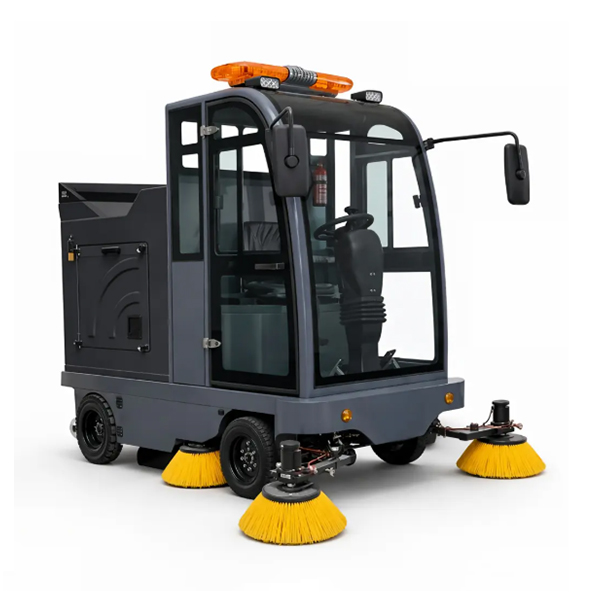
Three-Wheeled Fully-Enclosed Sweepers: Built for challenging environments, these sweepers protect the operator and effectively contain dust. Their rugged construction makes them ideal for outdoor areas, logistics centers, and places needing weather and debris protection.
| Type | Best For |
|---|---|
| Push Sweeper | Small indoor spaces |
| Ride-On Sweeper | Large warehouses, parking lots |
| Fully-Enclosed Sweeper | Outdoor, harsh climates |
The choice depends on facility size, debris type, and operational needs.
How to Choose the Right Industrial Electric Floor Sweeper
Finding the optimal Electric Floor Sweeper requires a thoughtful approach:
Floor Type and Area Size: Match the sweeper’s design to your site. For concrete warehouses, a ride-on sweeper with robust brushes is ideal. For tile or carpet, use machines with appropriate brush types and adjustable speeds.
Debris and Dirt Load: Facilities facing heavy contamination demand sweepers with high-capacity dust hoppers and strong filtration. Evaluate the kinds of debris (dust, liquids, larger refuse) the sweeper must handle.
Battery Life and Charging: Long operational hours mean prioritizing battery technology. Models with lithium-ion batteries offer more hours per charge and minimize downtime.
Operator Comfort and Usability: Good ergonomics—such as intuitive controls, comfortable seating and handles—support productivity and safety, especially for frequent or prolonged cleaning tasks.
Maintenance Support: Favor suppliers with robust after-sales service and easy access to spare parts. Self-cleaning features and automated diagnostics reduce long-term upkeep.
Safety Requirements: Assess included safety features, dust containment, and noise levels, ensuring compliance with workplace standards.
Electric Floor Sweeper Accessories and Upgrades
Enhancing your Electric Floor Sweeper with accessories boosts efficiency and adapts the machine for specialized needs:
Brush Attachments: Interchangeable brushes ensure effective cleaning across different floor types and debris challenges.
Filtration Upgrades: HEPA and advanced filtration modules improve air quality, especially useful in sensitive environments such as hospitals or food processing areas.
Battery Extensions: Additional battery packs offer longer operational times, minimizing disruption during long shifts.
Dust Suppression Systems: Add-ons that release mist or water effectively trap dust and prevent dispersion, critical in dust-sensitive industries.
Fleet Management Tech: Some sweepers offer GPS tracking and telemetry, allowing real-time monitoring of machine usage and maintenance schedules.
Maintenance Tips for Electric Floor Sweepers
Reliable performance from your Electric Floor Sweeper depends on regular maintenance practices:
Clean Brushes and Hoppers: After every shift, remove built-up debris to ensure optimal brush performance and prevent blockages.
Monitor Filtration: Replace or clean filters as recommended to maintain air quality and machine function.
Battery Management: Follow correct charging cycles and periodically check battery health to prevent performance drops.
Inspect Key Components: Schedule routine inspections for brushes, wheels, and electrical systems. Address any wear-and-tear issues promptly.
Frequently Asked Questions (FAQ) about Industrial Electric Floor Sweepers
What is an industrial electric floor sweeper? It’s a battery-powered cleaning machine designed to remove dust and debris from large spaces efficiently.
What surfaces can these sweepers clean? They handle concrete, tile, carpet, epoxy, and even asphalt, thanks to adjustable settings and brush options.
How do I select the right sweeper? Match the sweeper to your facility’s size, surface, debris type, and operational requirements. Consult supplier experts if needed.
Electric Floor Sweeper Safety Tips
Safety starts with consistent attention. Always read the manufacturer’s manual before operating. Wear proper protective gear in hazardous areas. Before each shift, check the battery, brushes, and filters. Don’t use the sweeper near flammable materials or wet electrical connections. Make sure the environment meets safety standards and follow local regulations.
An industrial electric floor sweeper can really change how you handle facility maintenance. With strong features, eco-friendly operation, and impressive efficiency, these machines set the bar for modern cleaning. Choose the right one and maintain it well, and you’ll see lower operating costs, better hygiene, and safer workplaces. As technology keeps improving, electric sweepers will only become more valuable—delivering smarter, faster, and cleaner results for industrial and commercial spaces.
Post time: Sep-17-2026