

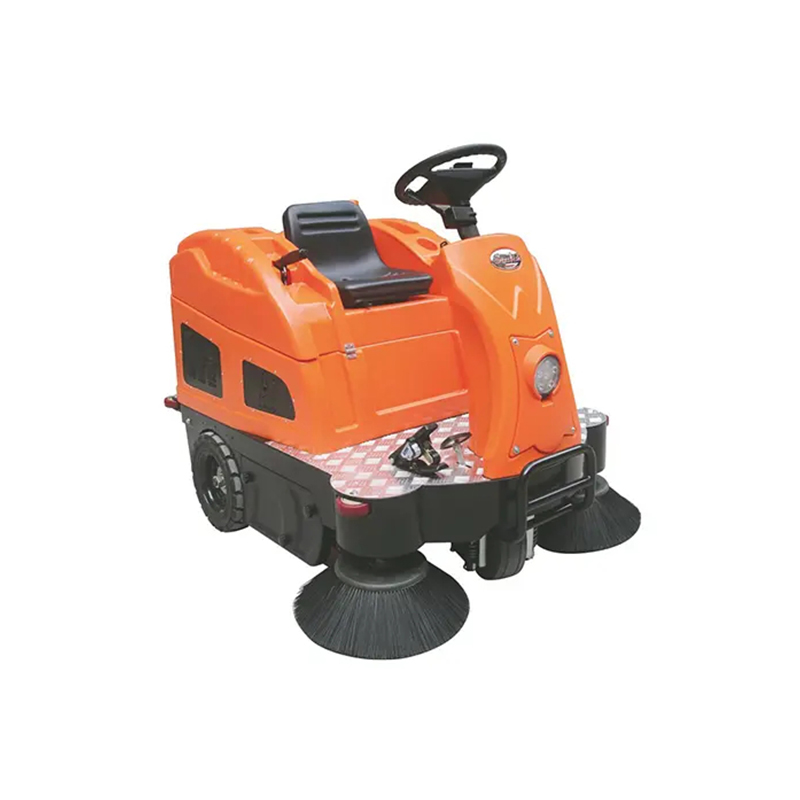
A ride on sweeping machine is a self-propelled cleaning tool built to clear dust, debris, and light litter from large hard surfaces. Instead of walking behind a manual broom or push sweeper, the operator sits comfortably in a cab and drives the unit through aisles, parking lots, or warehouse floors. These machines combine rotating main brooms and side brooms with a powerful vacuum and hopper system, collecting everything from fine sand to bulky scraps in one smooth pass.
How a Ride On Sweeping Machine Works
Understanding the basic mechanics helps you see why a Ride On Sweeping Machine is so effective. A large cylindrical main broom sits underneath the chassis and flicks debris onto a conveyor or directly into a collection hopper. One or two side brooms sweep along walls and edges, pulling dirt into the path of the main broom. A vacuum fan traps airborne dust before it escapes, which keeps the surrounding air cleaner. Most models run on batteries or an efficient engine, giving you hours of continuous sweeping before refueling or recharging. The operator controls everything from a dashboard panel, adjusting broom speed and suction without leaving the seat.
Key Features to Look For
When comparing models, focus on features that match real-world daily demands. Look for a large-capacity hopper if your site generates heavy debris, because less time spent emptying means more time sweeping. A high-quality dust filtration system matters tremendously, especially indoors where airborne particles can settle on inventory or machinery. Ergonomic seating, intuitive controls, and good visibility reduce operator fatigue on long shifts. Some machines offer high-dump hoppers that lift debris directly into a dumpster, cutting out manual handling. Durability counts too; a rugged frame and protected broom housings handle bumps and scrapes without constant repairs.
Where a Ride On Sweeping Machine Fits Best
These machines shine in spaces that are too large for a walk-behind sweeper but too busy for a full-size street sweeper. Warehouses and distribution centers use them to clear loading docks, pick aisles, and staging areas. Manufacturing plants rely on them to control dust around production lines. Retail parking lots, convention centers, and university campuses benefit from fast, quiet sweeping that doesn’t disrupt visitors. Even outdoor venues like stadiums and amusement parks run a ride on sweeping machine between events to keep grounds looking clean without a large crew.
Benefits Operators Notice Right Away
The immediate advantage is speed. A Ride On Sweeping Machine covers wide paths at a steady pace, turning an all-day sweeping job into a couple of hours. Less manual labor translates to fewer strain injuries and a more consistent result. Because the machine scrubs edges tight against curbs and racks, you spend less time touching up with a blower or hand broom. The dust control alone often justifies the investment; capturing fine particles at the source protects product quality and indoor air standards.
Common Questions About Ride On Sweeping Machines
What surfaces can a ride on sweeping machine clean?
Most models handle concrete, asphalt, tile, and epoxy-coated floors. The brooms adjust to uneven surfaces, but deep potholes or loose gravel may require a heavier-duty sweeper.
How often does the hopper need emptying?
It depends on debris volume. In a dusty warehouse, you might empty it once per shift. On a relatively clean parking lot, a single load could last several days. Checking the hopper visually during operation keeps you from overfilling.
Is training difficult for a new operator?
The learning curve is gentle. Controls mimic a small vehicle, with a steering wheel and foot pedal. Most suppliers offer a walk-through session, and operators usually feel confident within an hour.
Can a ride on sweeping machine pick up wet debris?
Standard models target dry material. Wet leaves or mud can clog the hopper and filters. If wet cleanup is a regular need, you may want a sweeper designed with a water-resistant filtration option.
Getting the Most from Your Ride On Sweeping Machine
Daily habits make the difference between a machine that lasts and one that drains your maintenance budget. Blow out or tap clean the dust filters at the end of each shift; clogged filters choke suction and strain the fan. Check the side brooms for wrapped string or plastic, and replace brooms once bristles wear past their wear indicators. Inspect the main broom for uneven wear patterns that could signal a misalignment. A quick walk-around to spot loose bolts or debris caught in the chassis takes two minutes and prevents larger breakdowns. Sticking to battery charging or engine service intervals keeps the machine ready when you need it most.
A ride on sweeping machine transforms a tedious, labor-heavy chore into a predictable routine that one person can manage with minimal effort. It brings together wide path coverage, effective dust control, and fast hopper dumping, all while keeping the operator comfortable and productive. By matching the right model to your facility’s debris type and surface conditions, you gain a dependable tool that pays back in cleaner floors, lower labor hours, and a safer work environment from the first shift forward.
Post time: May-29-2026